

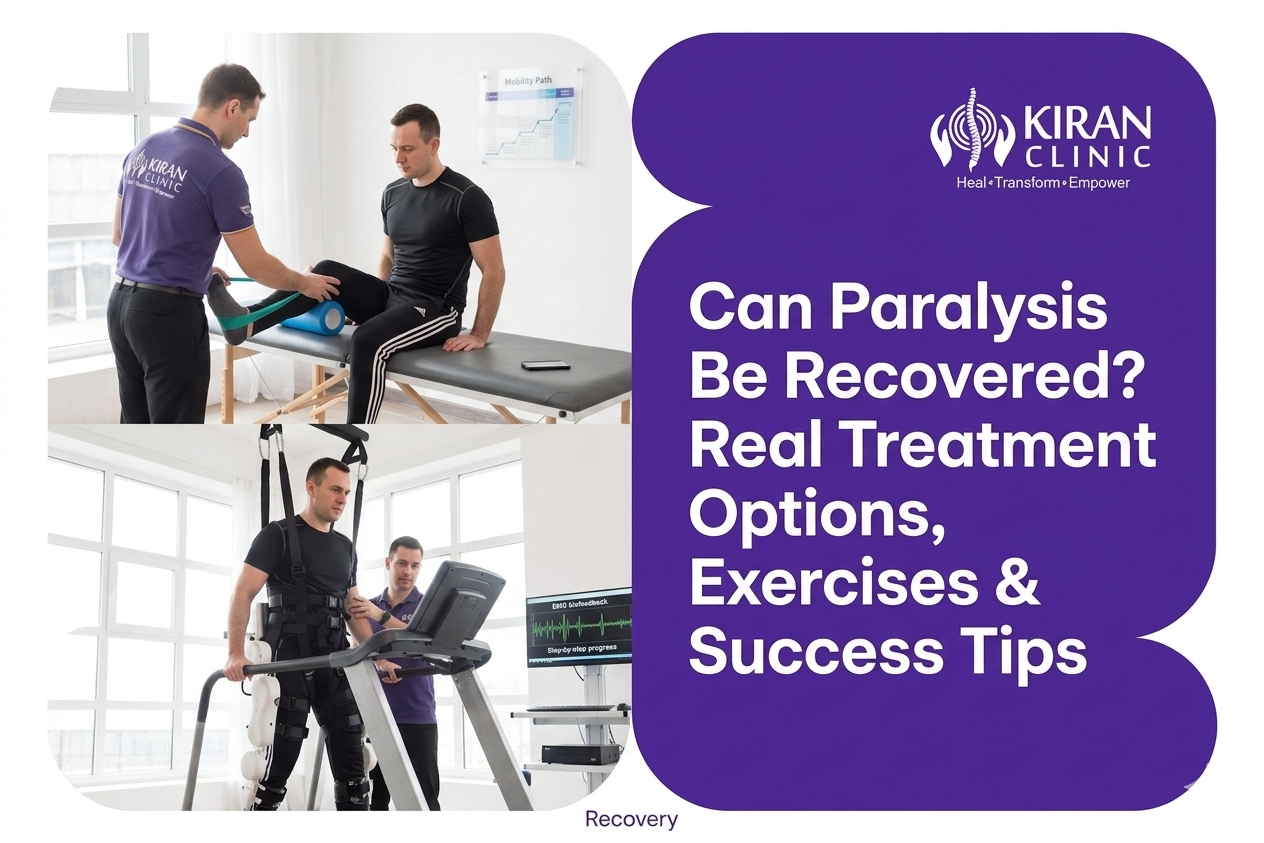
A paralysis diagnosis can feel like the end of the road. But for thousands of patients every year, it is not. In this blog, we will explore whether paralysis can be recovered, what real treatment options exist today, which exercises support recovery, and the success tips that make the biggest difference.
The answer to the most important question can paralysis be recovered is more hopeful than most people expect.
What Is Paralysis?
Paralysis is the loss of muscle function in part of the body, caused by damage or disruption to the nervous system. It can affect a single limb or the entire body, and it may be complete (total loss of movement) or incomplete (partial movement and sensation remain).
Common causes include:
- Stroke
- Spinal cord injury
- Brain injury or tumour
- Nerve damage from accidents
- Neurological conditions such as Guillain-Barré syndrome
The type, location, and severity of the nerve damage directly determine how much recovery is possible and how quickly.
Can Paralysis Actually Be Recovered?
The short answer is: yes in many cases, significant recovery is possible.
The nervous system has a remarkable ability called neuroplasticity, the capacity to rewire itself, form new neural connections, and compensate for damaged pathways. This is the biological foundation of paralysis recovery.
Recovery depends on several factors:
- Type of paralysis Incomplete paralysis has a significantly higher recovery potential than complete paralysis
- Cause of paralysis Stroke-related paralysis and peripheral nerve injuries often respond very well to rehabilitation
- Speed of treatment Early intervention dramatically improves outcomes
- Consistency of therapy Recovery is not passive; it requires sustained, expert-guided effort
Real Treatment Options for Paralysis
Modern rehabilitation combines multiple approaches for the best outcomes.
Physiotherapy
Physiotherapy is the cornerstone of paralysis recovery. A specialist physiotherapist designs a structured programme to retrain the nervous system, rebuild muscle strength, improve coordination, and restore functional movement. Techniques include passive range-of-motion exercises, neuromuscular re-education, balance training, and gait rehabilitation.
Chiropractic Care
Spinal alignment plays a critical role in nerve signal transmission. Chiropractic adjustments help reduce compression on nerve pathways, improve spinal mobility, and support the body’s natural neurological recovery particularly in cases involving spinal cord involvement or nerve impingement.
Occupational Therapy
Occupational therapy focuses on restoring the ability to perform daily activities dressing, eating, writing, and moving independently. It works alongside physiotherapy to translate physical gains into real-world function.
DNS Dynamic Neuromuscular Stabilization
DNS is an advanced rehabilitation technique used at specialist centres. It reactivates deep stabilising muscles and retrains the nervous system using developmental movement patterns the same patterns the brain used when you first learned to move as a child. It is highly effective for neurological rehabilitation.
Electrical Stimulation Therapy
Electrical stimulation delivers controlled impulses to paralysed muscles, preventing atrophy, improving circulation, and stimulating nerve regeneration. It is commonly used alongside physiotherapy for both upper and lower limb paralysis.
Exercises That Support Paralysis Recovery
Exercise is not optional in paralysis rehabilitation, it is the mechanism of recovery. These are among the most effective:
Passive Range-of-Motion Exercises A therapist or caregiver moves the affected limb through its full range of movement. Maintains joint health and stimulates nerve pathways even before voluntary movement returns.
Assisted Standing and Weight Bearing Even partial weight-bearing activates critical neural circuits in the spinal cord and brain, accelerating recovery timelines.
Mirror Therapy The brain observes movement of the unaffected limb in a mirror, tricking neural pathways into activating the paralysed side. Highly effective for stroke-related upper limb paralysis.
Core Strengthening A strong core supports posture, balance, and mobility. Exercises like supported seated balance and pelvic tilts are foundational.
Functional Movement Practice Practising real tasks reaching, gripping, stepping reinforces the specific neural pathways needed for daily independence.
Always perform rehabilitation exercises under the direct supervision of a trained physiotherapist to ensure safety and correct technique.
Success Tips That Make the Difference
Recovery from paralysis is a marathon, not a sprint. These principles separate those who make the most progress:
Start early. The sooner rehabilitation begins after injury or stroke, the greater the neuroplasticity window available for recovery.
Be consistent. Daily, structured therapy, not occasional sessions, is what drives real neurological change.
Set functional goals. Work with your therapist to define clear, measurable milestones standing independently, walking ten steps, using a hand. Goals create direction and motivation.
Involve your family. Caregiver support and home exercise practice between sessions significantly accelerate outcomes.
Trust the process. Recovery is rarely linear. Plateaus are normal and do not mean progress has stopped. Many patients see breakthroughs weeks or months into their programme.
Conclusion
Paralysis is one of the most challenging conditions a person can face but it is far from hopeless. With the right combination of physiotherapy, chiropractic care, DNS rehabilitation, electrical stimulation, and consistent effort, meaningful and sometimes full recovery is achievable for many patients.
The key is expert care, early action, and the determination to keep going.
Recovery does not happen to you. It happens because of you and the right team behind you.
Take the first step toward recovery today. Kiran Clinic, Indore experienced in paralysis rehabilitation, neurological physiotherapy, and non-surgical spinal care. Our team is ready to build your personalised recovery plan. Book Your Appointment Now
Frequently Asked Questions
Can all types of paralysis be recovered?
Not all, but many types particularly incomplete paralysis, stroke-related paralysis, and peripheral nerve injuries respond well to structured rehabilitation. Early treatment significantly improves recovery potential.
How long does paralysis recovery take?
It varies widely depending on the cause and severity. Some patients see improvement within weeks; others progress over months or years. Consistency in therapy is the most important factor.
What is the best treatment for paralysis?
A combination of physiotherapy, DNS, electrical stimulation, and chiropractic care personalised to the patient’s specific diagnosis consistently delivers the best outcomes.
